Backpacking Gear Checklist for a 3-Day Trip: What to Bring and What to Leave
Three days is the classic shakedown trip. It's long enough to feel remote, short enough that a mistake is annoying rather than serious — and it's exactly the length where packs quietly balloon. You're only carrying two nights of food, so the camp chair starts to feel reasonable, and so does the second stove, and the jacket for weather that isn't in the forecast. By mile six, all of it has an opinion. Here's a three-day checklist that separates what earns its place from what just rides along.
Start With a Weight Budget, Not a Shopping List
Before you touch a single item, decide what the pack should weigh. Base weight — everything except food, water, and fuel — of roughly 10 to 15 pounds is a comfortable target for a three-season, three-day trip. You don't have to go ultralight to enjoy yourself, but you do need a number, because a number turns packing into a series of decisions instead of a series of hopes.
It also gives you a way to judge upgrades later. When you know a sleeping pad swap saves twelve ounces, you stop guessing whether the money was worth it. Weigh your gear once, write the numbers down, and the next trip packs itself.
From there, every item answers three questions:
- Will I need it to stay safe?
- Will I need it to sleep and eat?
- Will I actually use it more than once?
Anything that fails all three is a luxury. You get one luxury per person, and you pick it at home, not at mile four.
The Essentials: What Has to Come
These items keep you warm, fed, hydrated, and found. Adjust quantities for your forecast and terrain, but don't cut the categories. If an entire category is missing, you're not packing light — you're packing for a different trip than the one you're on.
Shelter and Sleep
Your shelter and sleep system is the heaviest thing in the pack and the hardest to improvise. Get it right first.
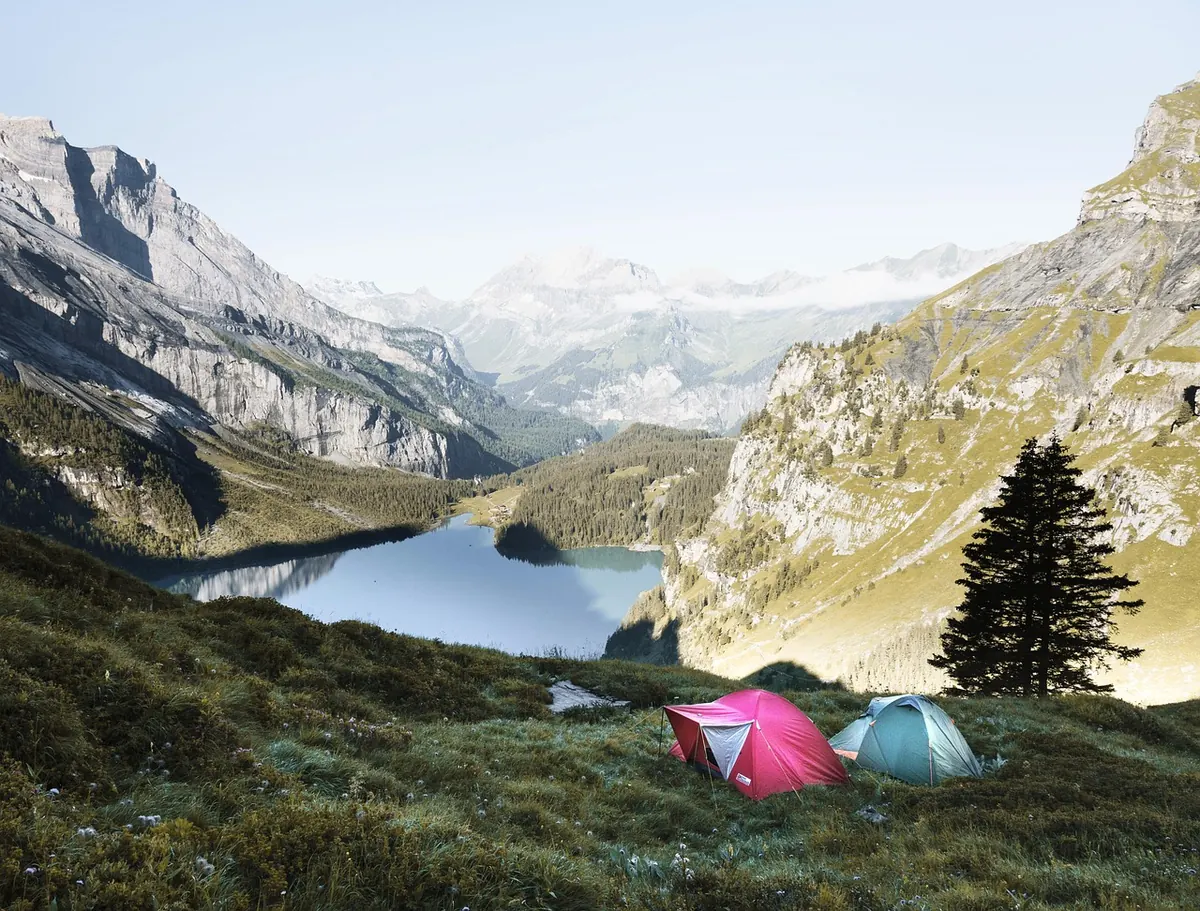
- Shelter — tent, tarp, or hammock — with every stake and guyline. Count them at home; a missing stake is a long night.
- Sleeping bag or quilt rated below the coldest temperature you expect. Valley bottoms run colder than the forecast does.
- Sleeping pad with enough R-value for the conditions. The ground steals heat faster than the air does, so a summer pad under a fall-rated bag still leaves you shivering at 3 a.m.
- A pack liner or dry bag for the sleeping bag, so a wet hike doesn't become a cold night.
- An inflatable pillow or a stuff sack full of spare clothes, whichever you'll actually sleep on.
Kitchen and Water
Two nights means four real meals plus breakfasts and a pile of snacks. Keep the kitchen small and the cleanup simpler.
- Stove, fuel canister, and a lighter or ferro rod. One stove. Not two.
- A pot with a lid, a long-handle spoon, and a small rag or bandana.
- Water treatment: a filter, tablets, or both. Filters clog; tablets never do.
- Two one-liter bottles, or a bladder plus a bottle. One container with no backup is a gamble.
- A trash bag, plus a hang line or bear canister if the area requires one.
Clothing: One Set to Hike In, One Set to Sleep In
This is where packs gain the most weight for the least benefit. The rule is simple: hike in one set, sleep in a dry set, and never wear your sleep clothes around the fire.
- One hiking shirt, one pair of pants or shorts, one pair of socks on your feet and one spare. Two spare socks, not five.
- An insulation layer — fleece or puffy — sized to fit under your shell.
- A rain jacket, and rain pants if the forecast is genuinely wet.
- A warm hat, light gloves, and a sun hat.
- Dedicated camp and sleep layers, kept dry in a stuff sack.
- Camp shoes or sandals only if you'll ford water; otherwise dry socks will do.
Navigation, Safety, and Repair
Small items, disproportionately important.
- Paper map and compass, even if you carry a phone. Batteries die politely and without warning.
- Headlamp with spare batteries.
- First aid kit tuned to you: blister care, painkillers, antihistamine, tape, personal medication.
- Repair kit: duct tape wrapped around a pen, a needle, a pad patch, a spare buckle.
- An emergency communication device if you'll be out of cell range.
- Sunscreen, lip balm, insect repellent, hand sanitizer, toothbrush.
- Trowel and toilet paper in a sealed bag. Leave no trace, always.
Food: Do the Math Before You Shop
Three days is roughly 4,500 to 7,500 calories of hiking, and most backpackers carry between 1.5 and 2.5 pounds of food per day. Weigh it. A food bag that feels light at the trailhead is usually the right one.
Calorie density is the whole game. Olive oil, nuts, nut butter, cheese, and chocolate pack more energy per ounce than almost anything else you can put in a bag. Repackage everything at home: tear out the cardboard, ditch the cans, combine the breakfasts. Packaging is dead weight you paid for and then carried.
Plan by meal slot rather than by mood:
- Two dinners — one of which should be no-cook in case you roll into camp late and exhausted.
- Two breakfasts — instant oats, coffee, or a bar if mornings are slow.
- Lunches and snacks — split into morning and afternoon bags so you stop rationing out of anxiety.
What to Leave Behind
The list of things people carry and never use is remarkably consistent. Cross these off before you zip up.
- The second stove, the second pot, the full spice rack.
- Extra clothes "just in case." You'll be dirty anyway, and you're not changing shirts at noon.
- A camp chair — unless you've genuinely decided it's your one luxury, and then you carry it without complaint.
- Books, journals, and cameras you won't touch after dark. A phone or a small paperback is plenty.
- Multiple knives or multitools. One small knife covers everything.
- Full-size toiletries. Decant into tiny bottles.
- Water for the entire day. Carry a liter and drink at sources.
Every ounce you leave behind is an ounce you don't have to carry uphill, and the trail does not care how much you spent on it.
The Night-Before Shakedown
Pack the bag at home, then walk around the block with it. Not the parking lot — the block. Ten minutes will tell you more about your shoulder straps and hip belt than any review ever will.
Then empty it out and pack it again with everything you'd need if it rained all three days. If something doesn't fit or doesn't have a home, it probably doesn't belong. Lay it all out one final time and ask the three questions again. Whatever survives goes in the pack, and the pack goes by the door.
A three-day trip should feel like a small version of a long trip, not a large version of an overnight. Keep the categories, cut the duplicates, and the miles will be easier than you expected.
Photo: 70154 / Pixabay