



Spring Foraging Guide: 10 Safe Wild Greens and How to Identify Them
The first warm week of spring changes everything. Nettles shove up through last year's dead grass, dandelion rosettes flatten themselves across the lawn, and woodland floors turn green almost overnight. It is the easiest season to learn foraging, because you can watch a plant from its first leaves to its flowers while there is still plenty of it growing close to home.
Below are ten spring greens a beginner can learn reliably, along with the plants they get confused with most often. Pick two or three and learn them properly. A confident identification is worth more than a basket of maybes.
Four Rules Before You Pick Anything
- Know the plant, not just the leaf. Learn the stem, the smell, the flower and the habitat. One feature is never enough.
- Harvest where it is abundant. If you can count the plants on one hand, leave them all.
- Get permission and check local rules. Private land, nature reserves and some protected species all have restrictions. Ask first.
- Avoid dirty ground. Roadside verges, sprayed lawns, dog-walking routes and industrial edges are not food.
If you have a health condition, are pregnant, or take regular medication, check with a healthcare professional before eating unfamiliar wild plants. And never eat a plant you have not identified with certainty — if in doubt, throw it out.
Ten Spring Greens and Their Lookalikes
1. Dandelion
Hairless, deeply jagged leaves in a flat rosette, with the teeth pointing back toward the crown. Stalks are hollow and hold milky sap; each stalk carries one flower. Young leaves are the least bitter. Lookalike: cat's ear, which has hairy leaves and a solid, branching stalk. It is also edible, but tougher and less pleasant.
2. Stinging Nettle
Opposite pairs of toothed, pointed leaves on a square stem, covered in fine stinging hairs. Take only the top two to four leaf pairs of young plants, wearing gloves. Lookalike: white dead-nettle, which has whorls of white flowers and no sting — it is edible too, and a good confidence builder. Cooking removes the sting completely.
3. Wild Garlic (Ramsons)
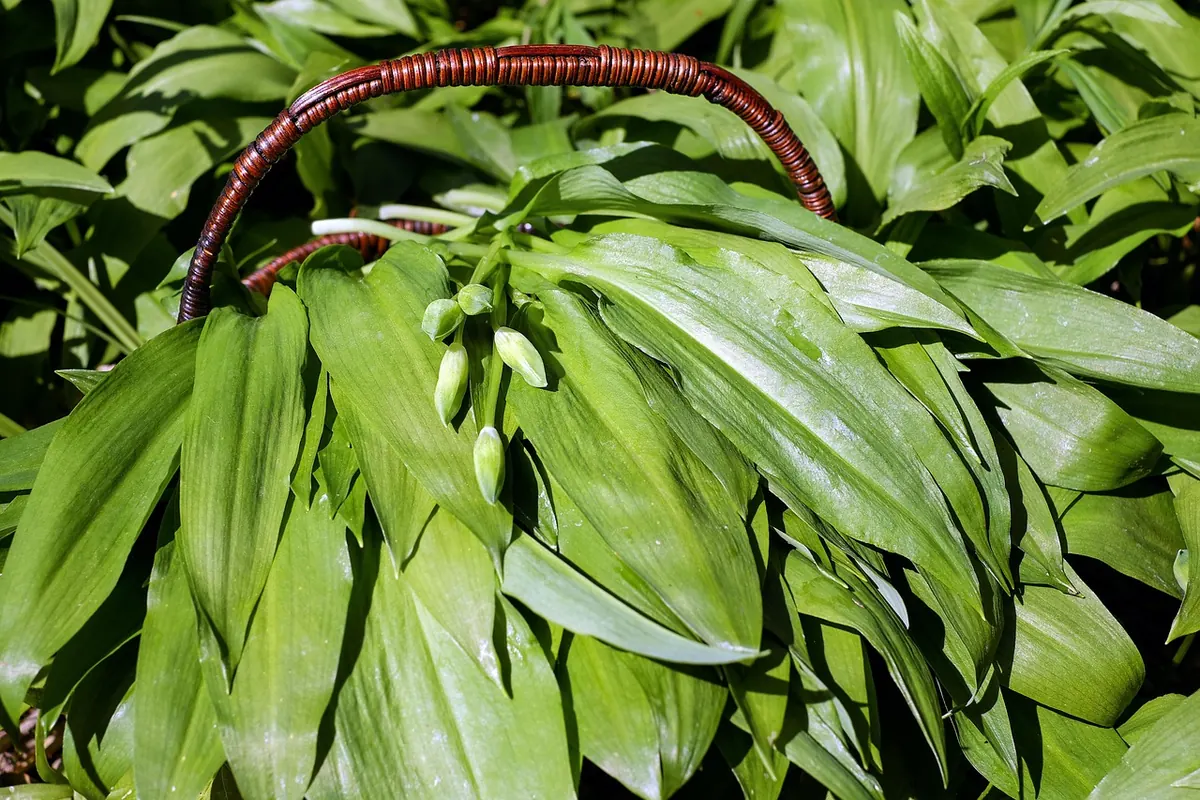
Broad, soft oval leaves, often in dense carpets under trees, with white star flowers later in spring. Crush a leaf: it should smell strongly of garlic. Serious lookalikes: lily of the valley and autumn crocus leaves, both toxic, neither of which smells of garlic. Lords-and-ladies has arrow-shaped, spotted leaves and must also be left alone. No garlic smell, no picking.
4. Chickweed
Small, bright, pale-green opposite leaves on a weak, sprawling stem. The giveaway is a single line of fine hairs running down one side of the stem. The tiny white flowers look like ten petals but are actually five, notched almost to the base. Lookalike: spurge, which bleeds milky sap when broken — leave it alone.
5. Wood Sorrel
Three heart-shaped leaflets that fold down at night, on thin stems in shady woodland, with white flowers veined in purple. It tastes sharply of lemon. Lookalike: clover, whose leaflets are rounder and taste of nothing much. Wood sorrel contains oxalic acid, so use it as a garnish rather than a salad base, and go easy if you have kidney problems.
6. Sweet Violet
Heart-shaped leaves and five-petalled purple or white flowers with a small spur at the back. Flowers and young leaves are both usable. Lookalike: lesser celandine, which has glossy dark leaves and yellow flowers and should not be eaten raw. If the flower is yellow, walk on.
7. Wild Strawberry
Three toothed leaflets on hairy stems, white five-petalled flowers, and fruit that hangs downward with the seeds sitting on the surface. Lookalike: mock strawberry, which has yellow flowers and fruit pointing upward with seeds in little bumps. Harmless, but disappointing in the mouth.
8. Plantain
Broadleaf and ribwort plantain both grow as rosettes of leaves straight from a crown, with strong parallel veins and no separate leaf stalk. They thrive on compacted ground. Lookalike: foxglove seedlings, which are soft, fuzzy and oval with no ribbing — those stay in the ground.
9. Cleavers
Square stems, whorls of six to eight narrow leaves, and tiny hooks that make the whole plant cling to your sleeves. The young tips are the part to take, eaten raw in small amounts or lightly cooked. Lookalikes: other bedstraws, all of which are harmless, though cleavers is the tastiest.
10. Garlic Mustard
First-year plants form scalloped, kidney-shaped rosettes; crush a leaf and you get garlic with a mustard edge. Second-year stems carry small white four-petalled flowers. It is invasive across much of North America, so harvesting it does the woodland a favour. Lookalike: other white-flowered mustards, none dangerous, but check the smell.
Harvest So the Patch Comes Back
- Take no more than one plant in ten, and never clear an area.
- Cut above the crown with scissors for perennials — the root stays and regrows.
- Move between patches instead of stripping one.
- Leave the biggest, healthiest plants to flower and set seed.
- Pick into a breathable bag or basket, not a sealed plastic tub.
Ethical foraging is not about taking less for its own sake. It is about being able to return to the same nettle bed in April for the next twenty years.
Washing, Tasting, Staying Safe
Rinse everything in cold water and check leaf by leaf — grit, insects and grass all hide in the folds. Eat a small amount the first time you try any new plant, and wait a day before eating more. Nettles and garlic mustard are best cooked; chickweed, wood sorrel and violet flowers are good raw. If you ever suspect you have eaten the wrong thing, keep a sample of the plant and seek medical help promptly rather than waiting to see what happens.
Your First Spring
Start with nettles and dandelions in the first week, then add chickweed and garlic mustard once you can recognise them without hesitating. Carry a small pair of scissors, gloves, a cloth bag and a notebook for sketches. Photograph each plant where it grows, note the date, and come back in a month when it is flowering — seeing the flower next to the leaf you already know is what locks an identification into memory. Do that for two or three species this spring and you will have them for life.
Photo: Couleur / Pixabay